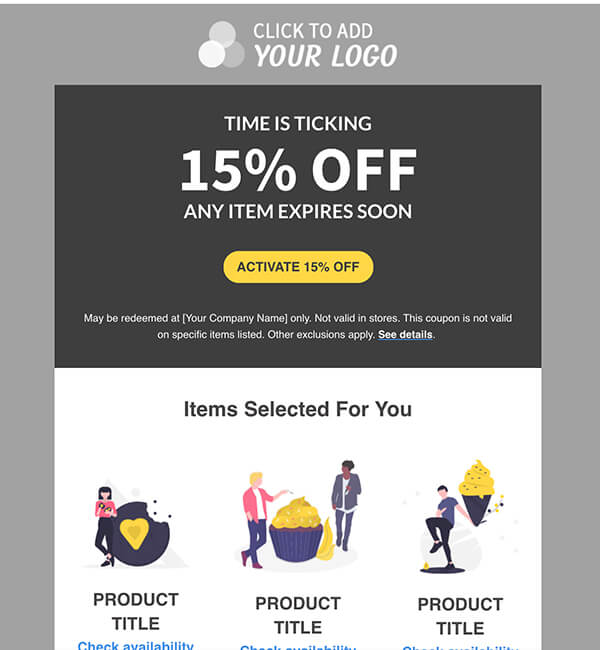
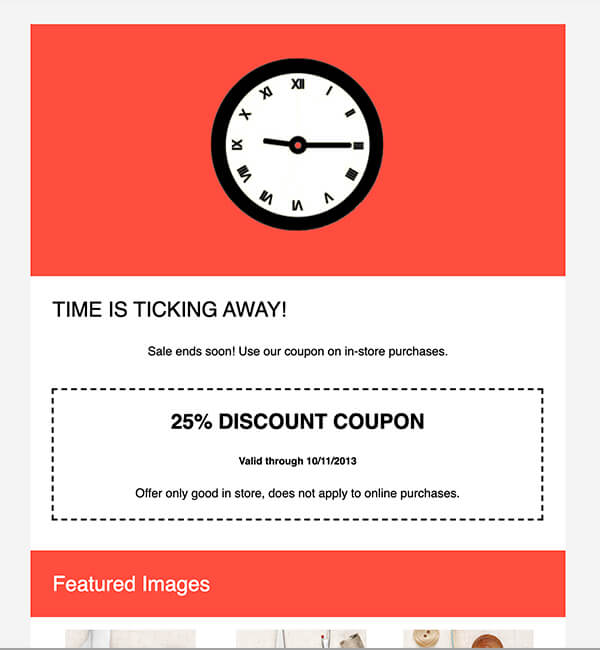
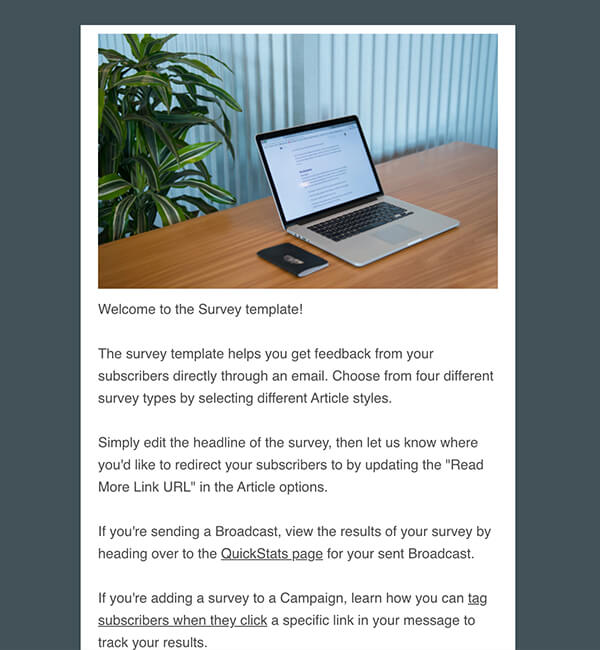
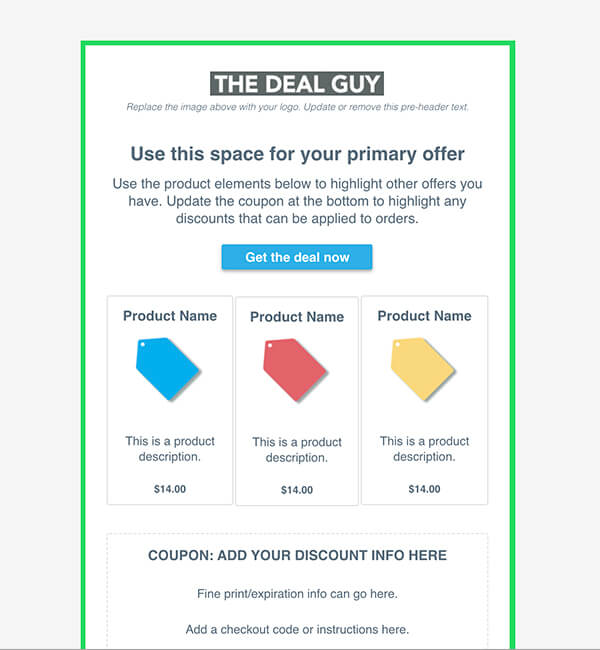
Text and HTML: Why Not Both?
Posted by Justin Premick
Just when you think a hotly-debated topic like whether to send messages in plain text or HTML has died down, along comes another angle to look at.
This time, the folks at MarketingSherpa bring us a case study from minor-league baseball where a combination of Text AND HTML messages boosted ticket sales over 260%.
So how do you incorporate this new data into your decision to use Text or HTML?
Maybe It’s Not Just One Or The Other
We’ve talked before about finding a happy medium — the idea that sending “lite” HTML email campaigns may outperform plain text as well as “heavy” HTML ones.
We hadn’t, however, talked about using a combination of the two (though we’ve mentioned the idea in passing during some of our live webinars).
I think that for most of us, mixing up text and HTML messaging strikes us as poor branding. It’s inconsistent. We worry that it will make subscribers less likely to open our emails because they won’t recognize them as easily. So we pick one or the other, and we stick with it.
Maybe you (and we) should start mixing it up.
How Would You (Or Do You) Use A Combination of Text and HTML?
The Sherpa article focuses on the short conversion cycle, and that may very well have played a role in the remarkable success that the Durham Bulls had in selling so many tickets in a short time. But surely there are other situations where a combination of text and HTML messaging can be effective…
When do you think it’s advantageous to mix text and HTML messaging, and why?
Read the article at MarketingSherpa.
Print This Post
10 Responses
-
Lewis
September 25th, 2007 at 9:12 pm
Does this mean sending TWO emails, or every other one plain text?
-
Justin Premick
September 26th, 2007 at 8:35 am
The article talks about sending some messages as plain text, and others as HTML. We’re not suggesting that you send two copies of the same message content to your subscribers.
Since they sent only a few messages here, it’s hard to say whether they’d advocate a 50/50 split in the long run. I would expect that a lot of factors go into determining whether to send a plain text or an HTML message. For example, in our webinars, Marc and I have mentioned that since most of the non-marketing email that most people receive is in plain text, sending certain messages in plain text (such as requests for feedback) may give them a more "personal" feel.
-
ted
September 27th, 2007 at 11:51 am
Where can I view the Sherpa article?
-
Justin Premick
September 27th, 2007 at 12:06 pm
Ted,
Whoops, guess I need to draw that out more. The Sherpa article is linked near the start of my post ("boosted ticket sales over 260%").
I’ll add another link to it near the end of this post. Thanks!
-
Rob Nomura
September 28th, 2007 at 2:42 pm
After reading the case study, I don’t agree that the response rate was due to a special secret to using both HTML or Text. Instead they used blood and guts marketing fundamentals:
Their success was a combined result of:
1) They researched past data and applied what they learned.
2) They used a multi-step approach (two emails)
3) They kept offering the sale. All links went back to the landing page.
4) From the research they developed a killer headline. Using a star players name in the headline/subject line.
5) From the data, they knew what time of day was best to send the email offers.
6) They changed up the packaging/media how they communicated (one text, one HTML). Like sending a sales letter and a post card. Or mailing a letter and following up by phone.
7) Sent to a very targeted list. Online ticket purchasers in the last 2 years and past vendors. a) past customers regularly have higher response rate, they’ve done business with you before (ticket sales to fans and corporate sponsors). b) Fans: they purchased online - higher likely hood that they are comfortable to the media used in campaign; email and purchase online at the landing page.The fact that they used text and HTML is one piece of the total campaign.
To really test it. They could divide their list into three parts. The control list would be the above (text and HTML), second would be two text emails, the third would be two HTML.
-
Justin Premick
September 28th, 2007 at 3:20 pm
Hi Rob,
There are definitely a lot of factors at play (many of which you’ve listed).
I still think that the varying of their message format between text and HTML played a significant role, especially when you consider that some of the other factors (who they were sending to, repeatedly making the offer) wouldn’t necessarily be different for this campaign as opposed to the other ones they ran through the year.
And you’re absolutely right - it would have been helpful to split test the format combinations. I did find it a bit funny that they didn’t do that (maybe they didn’t feel they had enough time?).
-
BJ Wright
October 5th, 2007 at 11:54 am
This is a great case study, I actually had just read it yesterday on their site before coming and finding it here. I do have question which I have asked before to your live support:
Can Aweber track what percentage of my users use text email vs. html? This would help in deciding which email strategy I should be using with my business.
As always thanks for the great posts.
-
Justin Premick
October 5th, 2007 at 12:31 pm
BJ,
Tracking how many people read the text version vs. the HTML one is difficult, partly because it’s not possible to track open rates for plain text messages (only for HTML ones).
One way to get an approximation of how many people are viewing each version is to "tag" your plain text and HTML links so you can see how many people are clicking through from the text version vs. the HTML one.
-
BJ Wright
October 5th, 2007 at 4:59 pm
Thanks, this is exactly what I was looking for.
-
» What Can Barack Obama Teach Us About HTML Email? - AWeber Blog
November 7th, 2007 at 10:07 am
[…] Text vs. HTML: Is Moderation The Key? Text Vs. HTML: Why Not Both? Pros & Cons of Text and HTML This entry was posted on Wednesday, November 7th, 2007 at 10:04 am and is filed under Email Template Design. You can follow any responses to this entry through the RSS 2.0 feed. You can leave a comment response, trackback from your own site, or permalink. […]
Email Tips.
Delivered.
Popular Topics
affiliates call to action Case Studies confirmed opt in content ideas design Email Deliverability email newsletters email statistics email web analytics examples from line holiday marketing HTML email templates ISPs list building marketing calendar multichannel marketing New Features personalization recommendations relevance rendering rss to email scheduling spam complaints split testing strategy subject line targeting testing thank you page traffic unsubscribes usability video email web formsSearch the Blog
Recent Comments